TB-500: The Systemic Repair Peptide
Most peptides are local workers. You inject them near a damaged tendon, they get to work on that tendon. The effects are real but geographically constrained.
TB-500 behaves differently. Researchers and self-experimenters consistently describe effects at sites distant from the injection point — a shoulder injury improving when the compound was injected in the abdomen, systemic flexibility improvements that don't map neatly to any single injection site. Whether this reflects genuine systemic distribution or something else isn't fully settled. But it's one of the reasons TB-500 has developed such a distinct reputation in the recovery space, and it's worth understanding why the mechanism makes this plausible.
The Protein It Comes From
TB-500 is a synthetic fragment of Thymosin Beta-4 — a protein so fundamental to cellular biology that it exists in virtually every tissue in the body, at significant concentrations, in almost every animal species that has been studied.
Thymosin Beta-4 was first isolated from thymus tissue in 1966 by Allan Goldstein and colleagues at the Albert Einstein College of Medicine. Its role in immune function was the initial focus of research. But as the field developed, it became clear that TB4 was doing something more fundamental than regulating immune cells — it was involved in the basic architecture of how cells move, organize, and repair themselves.
TB-500 is specifically the actin-binding domain of Thymosin Beta-4 — the sequence Ac-LKKTETQ. This fragment retains much of the parent protein's biological activity and is more practical for research purposes than synthesizing the full 43-amino acid TB4 chain.
Molecular weight: approximately 2888 Da. This is a larger peptide than BPC-157 (1419 Da), which has implications for reconstitution and storage.
The Actin Story
To understand TB-500's mechanism, you need to understand actin — which most people last thought about in a high school biology class if at all.
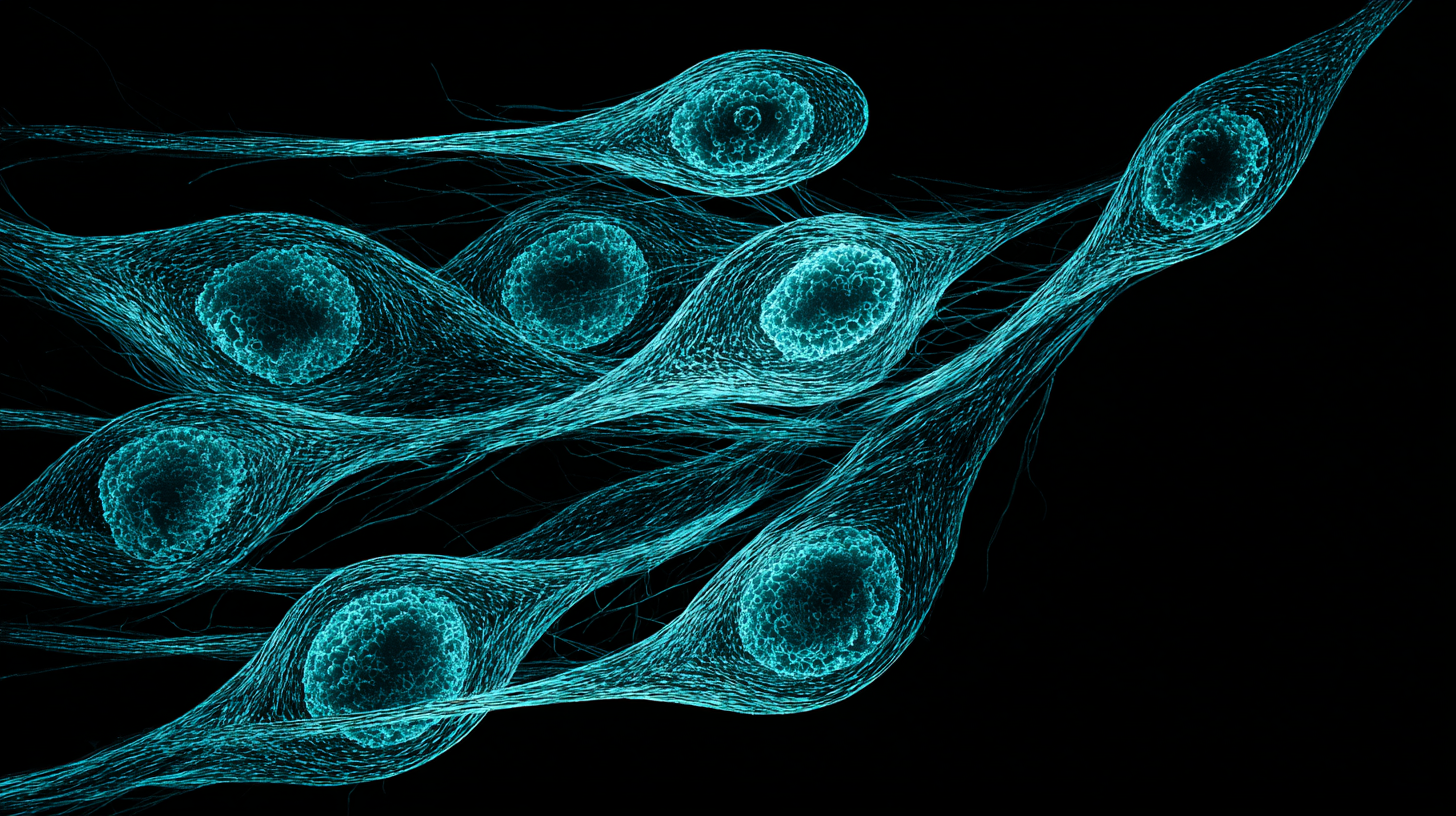
Actin is one of the most abundant proteins in every cell in your body. It exists in two forms: G-actin (globular, monomeric — individual units floating free) and F-actin (filamentous — units polymerized into long chains). The dynamic balance between these two forms is what determines a cell's shape, its ability to move, and its capacity to divide and reorganize.
When tissue is damaged, cells need to migrate toward the injury site to repair it. This migration — a fundamental requirement of wound healing — depends on precise regulation of actin dynamics. Cells extend projections, anchor them, and pull themselves forward. Every step of this process requires controlled actin polymerization and depolymerization.
TB-500 binds to G-actin and regulates its availability for polymerization. The effect isn't to block actin assembly — it's to control it with greater precision. The result is enhanced directed cell migration: cells move toward wounds more efficiently, organize more effectively, and establish the cellular architecture needed for repair.
This is mechanistically distinct from BPC-157's primary pathway (nitric oxide and angiogenesis). TB-500 operates at the level of cytoskeletal dynamics — the internal scaffolding that allows cells to move in the first place.
Beyond Actin: The Full Mechanism Picture
Angiogenesis. TB-500 upregulates VEGF (vascular endothelial growth factor) and its receptors, driving the formation of new blood vessels. This is where the mechanism overlaps with BPC-157 — both compounds promote vascularization of healing tissue, which is why the stack has a theoretical basis beyond simply combining two popular compounds.
Anti-inflammatory resolution. TB-500 reduces pro-inflammatory cytokine expression and appears to modulate the immune response in ways that favor healing over chronic inflammation. The distinction between resolving inflammation and suppressing it matters here: TB-500 appears to accelerate the transition through the inflammatory phase rather than simply dampening it.
Stem cell recruitment. Research has shown that Thymosin Beta-4 promotes the recruitment and differentiation of progenitor cells — precursor cells that can develop into tissue-specific repair cells. This is a more sophisticated mechanism than simply providing growth factors, and it may explain why the compound's effects seem to extend beyond simple local repair.
Cardiac tissue. A substantial body of TB4 research concerns the heart specifically. Studies have shown that Thymosin Beta-4 promotes cardiomyocyte survival after ischemia, stimulates epicardial progenitor cells, and supports cardiac regeneration after injury. This is unusual territory for a recovery peptide and represents one of the more compelling potential applications of the compound outside the athletic context.
The Research Foundation
TB-500 has a meaningful advantage over BPC-157 in one specific dimension: the underlying biology has been studied by multiple independent research groups, not a single institution.
Hynda Kleinman and colleagues at the NIH conducted foundational research on Thymosin Beta-4 in wound healing contexts. David Crockford at RegeneRx Biopharmaceuticals advanced the compound into human clinical trials — specifically for corneal healing and cardiac indications. The corneal work (under the name RGN-259) reached Phase 2 clinical trials for dry eye disease and neurotrophic keratopathy, with positive results. The cardiac work also reached Phase 2.
Neither program has reached regulatory approval, and RegeneRx has faced the funding challenges common to small biotech companies pursuing non-blockbuster indications. But the existence of multiple independent research groups, NIH involvement, and human clinical trial data gives the TB4/TB-500 research base a credibility profile that pure single-institution animal literature doesn't match.
The limitation: most of the rigorous research is on the full Thymosin Beta-4 protein, not specifically on the TB-500 fragment. Some extrapolation from the parent compound to the fragment is involved in current protocols.
TB-500 vs. BPC-157: The Real Comparison
These two compounds are so frequently discussed together that it's worth being precise about where they differ.
Mechanism: BPC-157 works primarily through nitric oxide modulation and growth hormone receptor sensitization. TB-500 works primarily through actin regulation and cell motility. These pathways are complementary — they address different aspects of the repair cascade.
Reach: BPC-157's effects appear to be more locally concentrated, particularly when injected near the target tissue. TB-500 appears to distribute more systemically — the anecdotal and some research evidence suggests effects at sites distant from the injection point.
Research pedigree: BPC-157 has 30+ years of animal data from one institution. TB-500/TB4 has multi-institution research, NIH involvement, and human clinical trials. In terms of research credibility, TB-500 has the stronger foundation despite being less widely discussed.
GI activity: BPC-157 has compelling evidence for oral bioavailability and GI-specific protective effects. TB-500 doesn't share this property.
The stack logic: Because the mechanisms don't overlap significantly, combining BPC-157 and TB-500 theoretically addresses more of the repair cascade simultaneously. This is why the combination is so commonly used. Human evidence for the specific stack doesn't exist, but the mechanistic rationale is coherent.
Protocol
Form: Lyophilized powder for reconstitution with bacteriostatic water. Given the larger molecular weight, TB-500 requires careful handling — avoid vigorous shaking during reconstitution, which can damage the peptide structure.
Route: Subcutaneous injection is standard. The systemic distribution argument suggests injection location may matter less for TB-500 than for BPC-157 — though most practitioners still inject near the target tissue.
Dosing:
Loading phase (weeks 1–6):
- 2–2.5 mg, twice per week
- Total weekly dose: 4–5 mg
Maintenance phase:
- 2 mg, once per week or biweekly
- Used after active injury has resolved for ongoing connective tissue support
Some protocols use higher loading doses (4–5 mg twice weekly) for the first two weeks following acute injury, then step down.
Cycle structure: Unlike BPC-157, which is often run continuously for the duration of an injury, TB-500 is more commonly cycled — loading for 4–6 weeks, then maintenance or a break. This is partly convention and partly the absence of long-term continuous use data.
Safety
TB-500's safety profile benefits from the human clinical trial history of its parent compound. RegeneRx's Phase 2 trials provided human pharmacokinetic data and didn't identify serious adverse events.
In animal research, no significant toxicity has been observed at doses substantially higher than research protocols use. No endocrine disruption, no hepatotoxicity, no carcinogenicity signals.
The theoretical concern shared with BPC-157 applies here: any pro-angiogenic compound raises a logical question about whether it could support tumor vascularization in a pre-existing malignancy. The evidence doesn't support this as a significant risk in otherwise healthy individuals, but it's worth noting for anyone with relevant personal history.
Reported subjective effects in human self-experimentation tend to be positive: improved flexibility, accelerated injury resolution, a general sense of improved recovery. The most unusual consistent report is an effect on flexibility and range of motion that doesn't map cleanly to any specific injury being treated — which fits with the systemic mechanism.
The Honest Bottom Line
TB-500 is underrated relative to BPC-157, largely because BPC-157 entered popular consciousness first and accumulated more community discussion. But the research foundation — multiple independent groups, NIH involvement, human clinical trials — is arguably stronger.
The core applications (wound healing, connective tissue repair, muscle recovery) are supported by solid mechanistic evidence and consistent animal data. The systemic reach distinguishes it from more locally-acting compounds and makes it particularly valuable for generalized recovery support.
The honest limitation is that TB-500 specifically — as distinct from the full Thymosin Beta-4 protein — hasn't been as directly studied as its parent compound. Some of the extrapolation is real and should be acknowledged.
For anyone doing serious work in the peptide recovery space, TB-500 warrants careful attention — particularly in combination with BPC-157, where the complementary mechanisms make the theoretical case for the stack genuinely compelling.
This article is for informational and educational purposes only. It does not constitute medical advice. TB-500 is not approved by the FDA for human use. Consult a licensed physician before considering any experimental compound.